
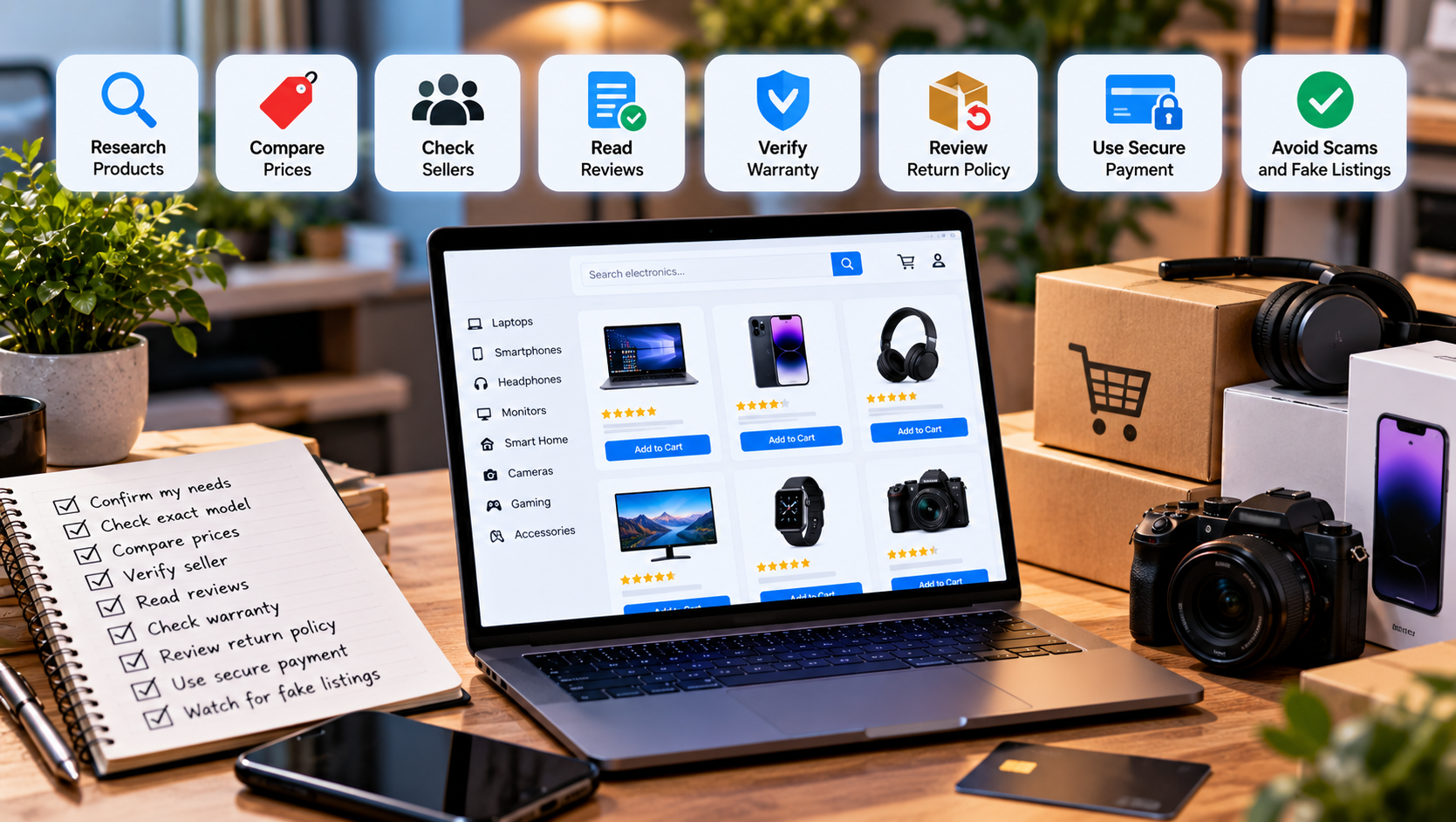
Buying electronics online can be convenient and often gives you access to more products, prices, and reviews than shopping in a physical store. But a good price does not always mean a good purchase.
Before buying a laptop, smartphone, headphones, monitor, smart home device, or other electronic product, it is worth checking a few important details. A little research can help you avoid incompatible products, misleading listings, unnecessary features, and difficult returns.
Start With What You Actually Need
Before comparing models, decide what you need the product to do. This helps prevent you from paying extra for specifications or features that will not make a meaningful difference in your everyday use.
For example, someone buying a laptop for browsing, documents, and video calls may have very different requirements from someone who needs one for gaming, video editing, or professional software.
Create a short list of essential features before you begin comparing products.
Research the Exact Model
Electronics with similar names can sometimes have different specifications, features, or generations.
Check the exact model number whenever possible and compare it with information from the manufacturer. This can help you avoid accidentally buying an older or different version of the product.
Pay particular attention to storage, memory, processor, screen size, connectivity, included accessories, and other specifications that matter for your intended use.
Compare Prices Across Multiple Stores
Checking several retailers can help you understand the normal price range for a product.
An unusually low price deserves additional attention. It may be a legitimate promotion, but it could also involve a refurbished product, an older model, a third-party seller, different warranty coverage, or missing accessories.
Compare the complete offer rather than looking only at the advertised price.
Check Who Is Actually Selling the Product
Large online marketplaces may allow independent third-party sellers to list products alongside items sold directly by the retailer.
Before purchasing, check the seller name, ratings, return conditions, shipping information, and available customer feedback.
The reputation of the marketplace itself does not automatically guarantee that every independent seller provides the same experience.
Read the Product Description Carefully
Do not rely only on the title, main image, or promotional graphics.
Read the complete description and check exactly what is included in the package. Some listings may show accessories in photos that are not actually included.
Also verify whether the product is new, used, refurbished, renewed, or open-box.
Check Compatibility Before Buying
Compatibility problems are common with electronics and accessories.
Before ordering, confirm that the product works with the devices, operating systems, ports, networks, power requirements, or accessories you already use.
This is especially important for computer components, chargers, cables, docks, smart home products, storage devices, and replacement parts.
Read Reviews Critically
Customer reviews can reveal recurring problems that may not appear in the product description, but individual reviews should not be treated as definitive proof of quality.
Look for patterns across a large number of reviews. Repeated comments about the same problem can be more informative than a single extremely positive or negative review.
When possible, combine customer feedback with professional reviews and technical information.
Understand the Warranty
Warranty coverage can vary depending on the product, seller, manufacturer, and region.
Before buying an expensive electronic device, check how long the warranty lasts, what it covers, and who is responsible for providing service.
Products sold through unauthorized sellers or imported from another market may sometimes have different warranty conditions.
Review the Return Policy
Even after careful research, a product may not meet your expectations.
Check how long you have to return the item, whether return shipping is free, whether restocking fees apply, and what condition the product must be in.
A clear return policy can be especially important when buying expensive electronics online without seeing or testing them first.
Be Careful With Refurbished and Open-Box Electronics
Refurbished and open-box products can sometimes provide good value, but their condition and warranty coverage can vary.
Check who performed the refurbishment, what condition is guaranteed, whether accessories are included, and what return and warranty protection you receive.
A lower price may be worthwhile when the seller clearly explains what you are buying.
Check the Total Cost
The advertised price may not represent the complete cost of ownership.
Shipping, taxes, required accessories, subscriptions, replacement parts, additional storage, proprietary chargers, or other expenses can increase the final amount you spend.
Consider these costs before deciding which option provides better value.
Avoid Buying Based Only on Specifications
Higher numbers do not always translate into a noticeably better experience.
A product may have impressive specifications while performing poorly in areas such as battery life, software quality, comfort, reliability, or ease of use.
Specifications are useful for narrowing your options, but they should be considered alongside real-world performance and your specific needs.
Use Secure Payment Methods
When shopping online, use established payment methods that provide appropriate transaction records and buyer protections.
Be cautious when an unfamiliar seller asks you to pay using unusual methods or move the transaction outside the platform where the product was listed.
Also verify that you are using the retailer’s legitimate website before entering payment information.
Watch for Fake or Misleading Listings
Some listings may use copied photos, confusing product names, unrealistic discounts, or descriptions designed to resemble well-known products.
If an offer looks suspicious, research the seller and product separately before purchasing.
Avoid letting a countdown timer, limited-stock message, or unusually large discount pressure you into buying before checking the details.
Keep Your Receipt and Order Information
Save your receipt, order confirmation, product listing, warranty information, and important communication with the seller.
These records can be useful if you need to request a return, warranty service, replacement, or other support later.
For expensive purchases, keeping the original packaging for at least the return period can also be helpful.
Looking for practical product ideas? Explore our guide to 10 useful gadgets that can make everyday life easier for inspiration before your next purchase.
Final Thoughts
Buying electronics online does not need to be complicated. The most important steps are understanding what you need, researching the exact product, checking the seller, comparing prices, and reviewing warranty and return conditions before paying.
Taking a few extra minutes to verify these details can help you avoid many common purchasing problems and make it easier to choose electronics that actually fit your needs.
Looking for practical tech products? Explore our guide to 10 useful gadgets that can make everyday life easier for ideas on devices and accessories worth considering.