
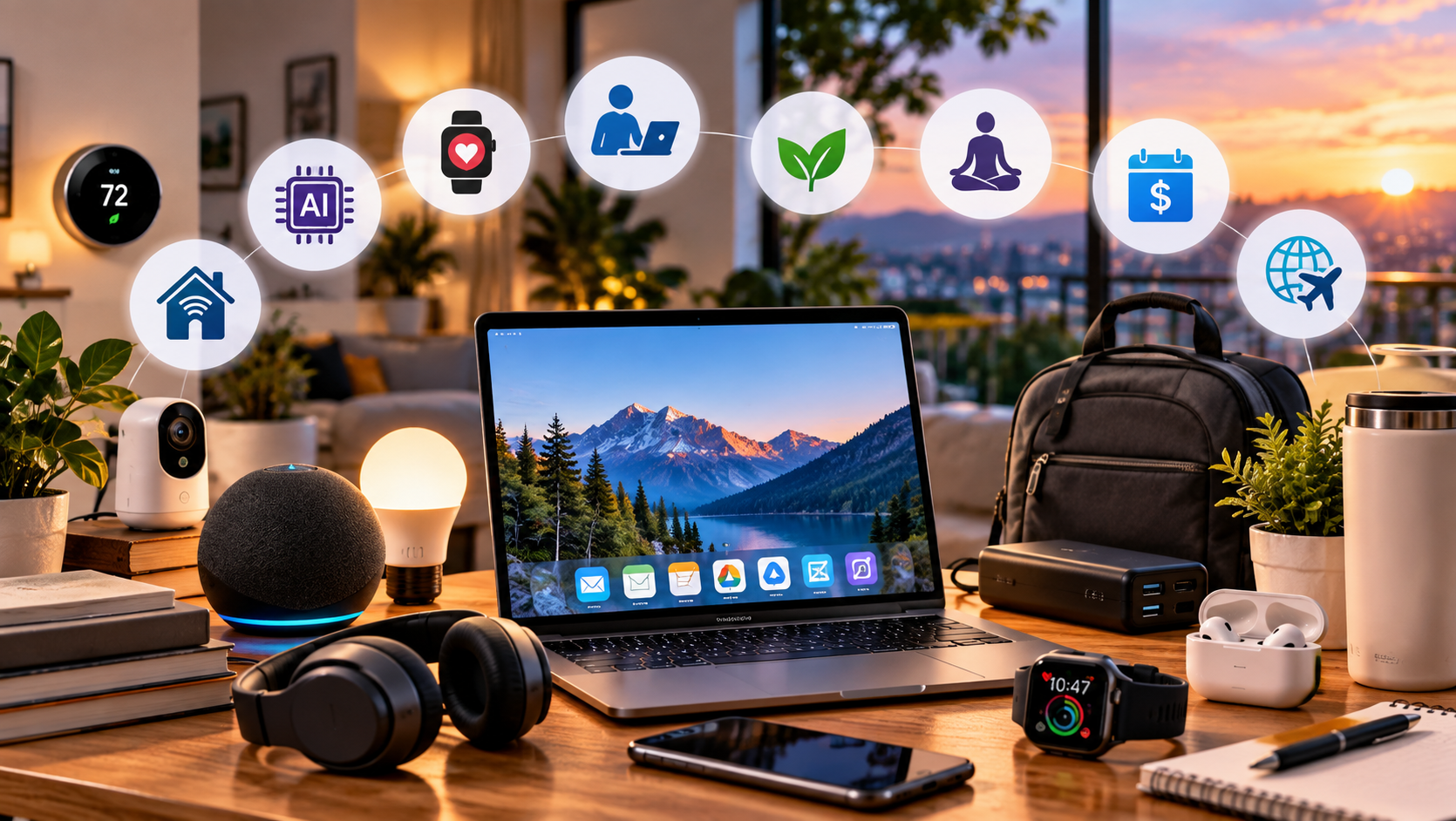
Technology is becoming increasingly connected to everyday life. From the way people work and exercise to how they manage their homes, shop, travel, and entertain themselves, new products and digital services continue to influence daily routines.
Not every trend becomes a lasting change, however. Some technologies disappear quickly, while others gradually become useful enough to become part of everyday life. Here are several lifestyle and technology trends worth paying attention to.
AI Becoming Part of Everyday Tools
Artificial intelligence is increasingly being integrated into software and devices people already use rather than existing only as a separate service.
Writing tools, search platforms, smartphones, productivity software, photo editors, customer service systems, and other products are adding AI-powered features.
The most useful applications will likely be those that make existing tasks faster or easier without adding unnecessary complexity.
Smarter and More Connected Homes
Smart home technology continues to expand beyond basic speakers and connected light bulbs.
Locks, thermostats, cameras, appliances, sensors, robot vacuums, and other devices can increasingly work together through automated routines.
For consumers, compatibility, privacy, reliability, and long-term software support remain more important than simply owning the newest connected device.
Wearable Technology Expanding
Wearable technology is becoming more varied as smartwatches are joined by smart rings, glasses, fitness devices, and other compact sensors.
These products can provide information about activity, exercise, sleep, notifications, and everyday routines.
The value of a wearable depends on whether the information it provides is genuinely useful to the person wearing it rather than how many measurements it can collect.
Flexible and Remote Work
Remote and hybrid work have increased interest in tools that allow people to work effectively from different locations.
Portable monitors, compact keyboards, webcams, noise-canceling headphones, cloud software, communication platforms, and portable charging products can all support more flexible work environments.
Instead of recreating a traditional office with more equipment, many people may benefit from smaller setups designed around portability and comfort.
Technology Supporting Healthier Routines
Consumer technology is increasingly being used to support exercise, sleep, nutrition, focus, and other wellness-related routines.
Fitness trackers, workout platforms, smart scales, sleep-related devices, and mobile apps can make it easier to track habits and progress.
These products can provide useful information, but consumer wellness technology should not automatically be treated as a replacement for professional medical advice or diagnosis.
More Attention to Digital Well-Being
As screens and notifications become more common, there is also growing interest in reducing unnecessary digital distractions.
Focus modes, app limits, notification controls, distraction-free devices, and other tools can help people become more intentional about how they use technology.
Sometimes the most useful technology feature is one that helps you spend less time interacting with technology.
Subscription Fatigue
Many products and services have shifted toward recurring subscriptions, including software, entertainment, cloud storage, security cameras, fitness platforms, and productivity tools.
Individually, these subscriptions may appear inexpensive, but several small monthly charges can add up quickly.
Reviewing recurring expenses and canceling services that are rarely used can become an important part of managing digital spending.
More Practical Home Automation
Home automation is gradually moving away from novelty and toward solving simple everyday problems.
Automated lighting, temperature schedules, robot cleaning, leak detection, security alerts, and energy monitoring can provide practical benefits without requiring an extremely complicated smart home.
The most useful automation is often the one that quietly performs a repetitive task without requiring constant attention.
Portable Power and Charging
As people rely on more electronic devices, portable charging is becoming increasingly useful.
Power banks, compact fast chargers, multi-device charging stations, portable power stations, and USB-C accessories can reduce the need for multiple chargers and keep devices working while traveling or away from traditional outlets.
Compatibility and power requirements remain important because devices that use the same connector do not necessarily support the same charging speeds.
Buying Fewer but More Useful Products
Consumers have access to an enormous number of gadgets, apps, and accessories, but owning more products does not necessarily make life easier.
A more practical approach is to choose products that solve recurring problems, replace several less useful items, or provide enough value to justify their cost and maintenance.
Comparing products carefully before buying can also reduce the number of gadgets that end up unused.
Privacy Becoming a Bigger Buying Consideration
Connected devices and online services can collect significant amounts of information about how they are used.
As smart home products, AI tools, wearables, and digital services become more common, privacy settings and data practices can become an increasingly important part of purchasing decisions.
Before relying on a connected product, consider what information it collects, where that information may be stored, and what controls are available.
Technology That Works Together
A growing number of consumers use products from several different technology companies.
Devices and services that can communicate across platforms can reduce the need to manage separate systems for every product.
When buying connected devices, compatibility with your existing technology may provide more long-term value than choosing a product based on a single impressive feature.
Convenience Without Unnecessary Complexity
Many technology trends promise convenience, but additional devices, accounts, subscriptions, and apps can sometimes create more work instead.
Before adopting a new product or service, consider whether it genuinely simplifies something you already do.
Technology is most valuable when it becomes easy enough to support your routine without constantly demanding your attention.
Final Thoughts
Lifestyle and technology trends can be interesting to follow, but being early to every new product is not necessary.
The trends worth watching are often the ones that gradually become more useful, affordable, compatible, and reliable. Instead of chasing every new technology, focus on products and services that solve real problems and fit naturally into your everyday life.
A good technology purchase should provide practical value long after the initial excitement has disappeared.