
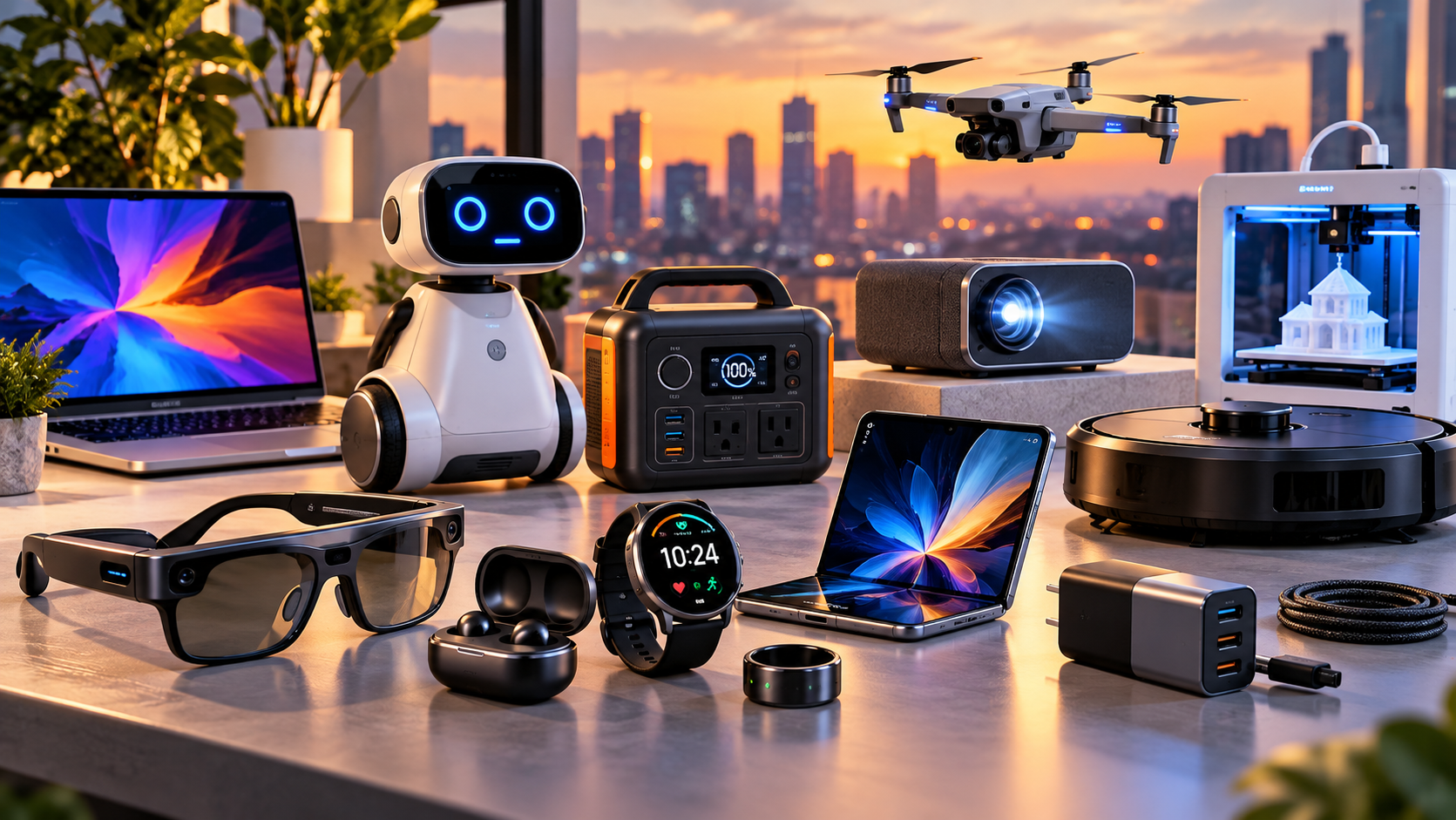
Technology changes quickly, and new products often promise to transform the way we work, communicate, travel, and manage everyday life. Some innovations become genuinely useful, while others disappear after the initial excitement.
Instead of trying to predict exactly which products will dominate the future, it can be more useful to watch the technologies that are becoming more practical, accessible, and relevant to everyday consumers. Here are several emerging technology categories worth keeping an eye on.
AI-Powered Personal Devices
Artificial intelligence is increasingly moving beyond traditional software and becoming part of dedicated consumer devices. New products are experimenting with AI assistants that can respond to voice commands, analyze information, recognize objects, summarize conversations, and help users complete everyday tasks.
The category is still evolving, so usefulness can vary significantly between products. Before buying an AI-focused device, consider whether it offers capabilities that your smartphone or computer cannot already provide.
Smart Glasses
Smart glasses are becoming more capable as companies experiment with cameras, speakers, microphones, displays, and AI-powered features built into wearable designs.
Potential uses include hands-free photography, navigation, translation, communication, and accessing information without constantly looking at a phone.
Comfort, battery life, privacy, and practical usefulness will be important factors as this technology continues to develop.
Wearable Health and Fitness Technology
Wearable devices continue to expand beyond basic step counting. Smartwatches, rings, fitness trackers, and other sensors can monitor different aspects of activity, sleep, workouts, and general wellness.
The most useful device depends on what information you actually want to track. Consumers should also remember that wellness information from consumer devices is not automatically equivalent to professional medical evaluation.
Advanced Robot Vacuums and Home Robots
Robot vacuums have already become common, but newer models continue to add more advanced navigation, object detection, automatic cleaning stations, and improved mapping.
Companies are also experimenting with other types of home robots designed to perform or assist with household tasks.
The important question is whether these products can reliably save enough time to justify their price and maintenance requirements.
Portable Power Stations
Portable power stations provide significantly more capacity than typical phone power banks and can power laptops, small appliances, lights, and other electronics.
They can be useful for camping, road trips, outdoor work, and backup power during outages. Some models can also work with portable solar panels.
When comparing options, consider battery capacity, output power, charging speed, weight, available ports, and the types of devices you expect to power.
Foldable and Flexible Displays
Foldable screens have already appeared in smartphones and laptops, but display technology continues to evolve.
Future products may experiment with different folding, rolling, or expanding designs that allow larger screens to fit into smaller devices.
For consumers, durability, price, battery life, and whether the flexible design provides a meaningful advantage remain important considerations.
Next-Generation Smart Home Devices
Smart home products are gradually becoming easier to connect across different brands and platforms. Improvements in connectivity standards may reduce the need for separate apps and complicated setup processes.
Lighting, locks, sensors, thermostats, cameras, appliances, and other devices can increasingly work together as part of automated routines.
Before investing heavily in a smart home ecosystem, compatibility and long-term software support remain important factors.
Personal 3D Printing
Consumer 3D printers are becoming easier to use, opening more possibilities for creating replacement parts, tools, organizers, prototypes, decorations, and hobby projects at home.
The technology can be especially useful for people who enjoy designing or building things, although there is still a learning curve.
Potential buyers should consider print quality, supported materials, software, maintenance, and the cost of replacement materials.
Product worth considering: 3DMakerpro Moose 3D Scanner
The 3DMakerpro Moose is a 3D scanner designed to capture physical objects and turn them into digital 3D models. It features AI-assisted visual tracking and is designed for scanning medium-sized objects.
For hobbyists, designers, and makers interested in 3D printing, a scanner can complement a 3D printer by helping digitize existing objects for further editing and creative projects.
Before purchasing, consider the scanner’s compatibility with your computer, software requirements, and whether its scanning capabilities match the size and detail of your projects.
Explore the 3DMakerpro Moose 3D Scanner
Compact Projectors
Portable projectors continue to improve in brightness, resolution, connectivity, and ease of use. Some models combine streaming software, speakers, automatic focus, and image adjustment in compact designs.
They can provide a flexible alternative to a traditional television for certain rooms, travel situations, or outdoor entertainment.
However, image quality depends heavily on lighting conditions, so brightness and intended viewing environment are important considerations.
Faster and More Versatile Charging Technology
Charging technology continues to improve across smartphones, laptops, tablets, and other electronics. More powerful USB-C chargers can reduce the number of separate adapters needed for different devices.
Compact chargers using newer components can also provide substantial power without requiring a large power brick.
When buying chargers, cables, or power accessories, check supported charging standards and power ratings rather than assuming every USB-C product performs the same way.
What Makes Emerging Technology Worth Buying?
Being new does not automatically make a product useful. Early versions of emerging technologies can be expensive, limited, or quickly replaced by improved models.
Before buying, consider whether the product solves a real problem, how frequently you would use it, whether the technology is mature enough for your needs, and whether existing products can already accomplish the same task for less money.
Waiting can sometimes be the better decision, especially when a product category is changing rapidly.
Final Thoughts
Emerging technology can provide an early look at how everyday products may change over the next several years, but not every innovation needs to be purchased immediately.
Pay attention to technologies that become more reliable, affordable, and genuinely useful rather than buying something simply because it is new. The most interesting technology is often the technology that eventually becomes practical enough to quietly improve everyday life.