
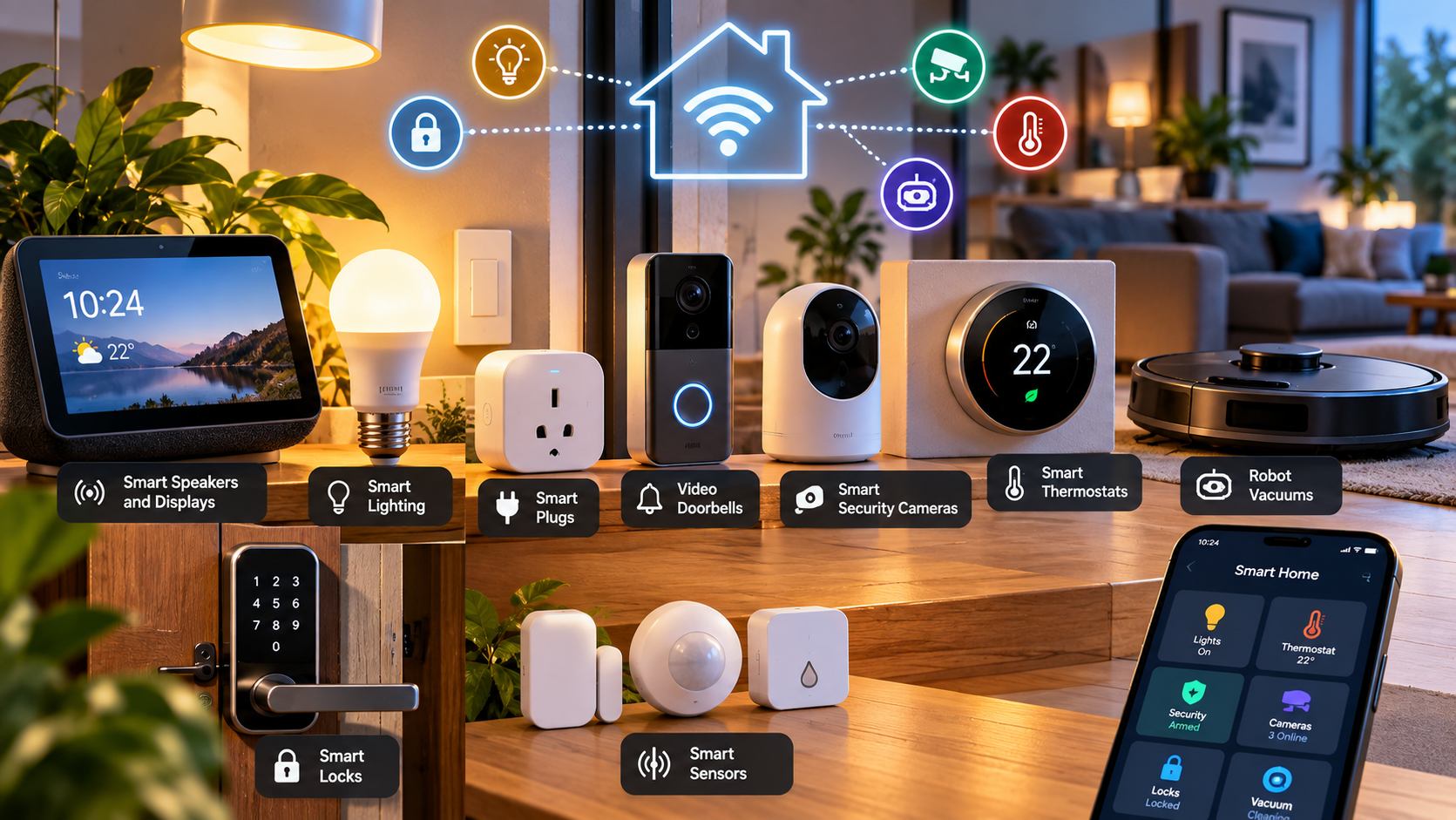
Smart home devices can make everyday routines more convenient, improve security, reduce repetitive tasks, and even help manage energy use. But with so many connected products available, it is easy to spend money on devices that seem impressive at first but add very little value to your daily life.
The best smart home products are usually the ones that solve a specific problem and work reliably with the devices you already own. Before building a complicated smart home setup, it helps to understand which categories are genuinely useful and what to consider before buying.
Smart Speakers and Displays
Smart speakers and displays can act as a central control point for compatible devices around your home. They can play music, set timers, answer basic questions, control lights, and manage routines using voice commands.
A smart display adds a screen for information such as timers, calendars, cameras, recipes, and other visual content. Before choosing one, consider which smart home ecosystem you plan to use and whether your other devices are compatible with it.
Smart Lighting
Smart bulbs, switches, and lighting systems are among the easiest ways to start building a smart home. They can allow you to control lights remotely, adjust brightness, create schedules, and automate lighting based on your routine.
Smart bulbs are generally easier to install, while smart switches can be more practical when several lights are controlled from the same location. Consider installation requirements and compatibility before buying.
Smart Plugs
A smart plug can add basic automation to ordinary appliances by allowing you to turn power on or off remotely. They are useful for lamps, fans, coffee makers, and other devices that work with a simple power switch.
Smart plugs are relatively inexpensive and can be a practical way to experiment with home automation without replacing existing appliances.
Smart plugs are just one example of practical technology for everyday use. For more ideas, explore our guide to 10 useful gadgets that can make everyday life easier.
Video Doorbells
Video doorbells allow you to see who is at your door and receive notifications when someone approaches. Depending on the model, features may include two-way audio, motion detection, package alerts, and recorded video.
Before buying, check whether video storage requires a subscription and whether the device works well with your existing smart home platform.
Smart Security Cameras
Indoor and outdoor security cameras can help monitor entrances, rooms, pets, and other areas around your home. Features vary widely, including motion alerts, night vision, local storage, cloud recording, and object detection.
Consider where recordings are stored, whether a subscription is required, and what privacy controls are available before installing connected cameras in your home.
Smart Thermostats
A smart thermostat can automate heating and cooling schedules and allow temperature control from a phone. Some models can also learn routines or adjust settings based on whether someone is home.
These devices can be useful, but compatibility with your existing HVAC system is essential. Check installation requirements before purchasing.
Robot Vacuums
Robot vacuums can reduce the amount of routine floor cleaning required, especially in homes with hard floors, pets, or frequently used areas.
More advanced models may include room mapping, automatic charging, obstacle detection, and self-emptying docks. The right choice depends on your floor type, home layout, and how much maintenance you want to avoid.
Smart Locks
Smart locks can provide keyless entry using a phone, keypad, fingerprint, or other authentication method. They can also make it easier to provide temporary access to family members, visitors, or service providers.
Because a lock is a security device, reliability and access options should matter more than novelty. Consider battery life, backup entry methods, installation, and compatibility with your door.
Smart Sensors
Small sensors can make other smart devices more useful. Motion, contact, temperature, water leak, and occupancy sensors can trigger automations or send alerts when certain conditions occur.
For example, a water sensor near a washing machine or sink can alert you to a leak, while a contact sensor can tell you when a door or window is opened.
Do You Need a Smart Home Hub?
Some devices connect directly through Wi-Fi, while others use technologies that may require a compatible hub or controller. A hub can help different devices communicate and can make larger automation systems easier to manage.
However, a dedicated hub is not necessary for every home. If you only plan to use a few simple devices, choosing products that work directly with your existing platform may be easier.
Check Compatibility Before Buying
One of the most important considerations when buying smart home devices is whether they can work together. Products from different brands may use different platforms, apps, or communication standards.
Before purchasing, check which ecosystems and connectivity standards the device supports. Planning compatibility early can prevent you from ending up with several separate apps and devices that cannot communicate with each other.
Consider Privacy and Security
Connected home devices may collect information about your routines and, in some cases, audio or video. Review privacy settings, account security options, software update policies, and how data is stored.
Use strong passwords, enable additional account security when available, and keep device software updated.
What Is Actually Worth Buying?
There is no single smart home device that everyone needs. The most worthwhile products are the ones that solve a recurring problem in your home.
For many people, simple devices such as smart lighting, smart plugs, sensors, or a robot vacuum can provide more everyday value than building an expensive and complicated automation system.
Start small, see which automations you actually use, and expand only when another device can provide a clear benefit.
Final Thoughts
A useful smart home should make everyday life simpler rather than adding more apps, subscriptions, and maintenance. Focus on devices that solve real problems, work with your existing technology, and provide features you will regularly use.
You do not need to automate everything at once. Starting with one or two practical devices gives you time to learn what works for your home before investing in a larger smart home system.